21 Eylül 2018 Cuma

Styrofoam Brick Making Machine

Styrofoam Brick Making Machine are produced with special purposes. Manufacturing machine spreads concrete onto molds. Right after spreading it, vibration and press applied, which makes the concrete brick stronger and homogeneous.
By time, production had got on a new level, when isolation materials were added into bricks while manufacturing process. Isolation of sound, heat, water and etc. The machine for manufacturing concrete blocks has a new feature of adding the Styrofoam tiny layer between walls of the brick.
This process of brick manufacturing differs from a regular one. For manufacturing this kind of brick you have to have a machine with two different entries of concrete, for each layer of concrete. Between those entries there is special stand for Styrofoam plates to insert between the concrete layers manually.

20 Eylül 2018 Perşembe

SA traces deadly listeria outbreak to meat product

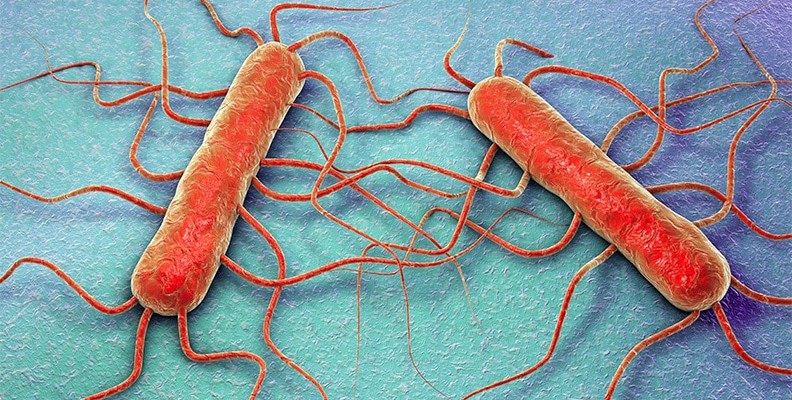
South Africa’s health ministry is warning consumers to avoid “all processed meat products that are sold as ready-to-eat” after tracing the source of deadly listeria outbreak to a sausage meat product.
“As of 02 March 2018, a total of laboratory-confirmed cases have risen to 948, still counting from January 2017,” Minister of Health Aaron Motsoaledi said Sunday in remarks published on the website for South Africa’s National Institute of Communicable Diseases. “Of these 948, a total 659 patients have been traced and 180 of them have unfortunately died.”
Officials have identified a meat product known as “polony” from the Enterprise Food-Production facility in Polokwane in South Africa as the source of the outbreak, Motsoaledi said.
In a statement on posted to its Twitter account, Enterprise said it was working with all relevant authorities to recall its products.
“We have suspended operations at both Enterprise manufacturing facilities (Polokwane and Germiston) and have stopped supply to retailers,” the company said.

Sick children

Motsoaledi said the listeria had been traced to the product after nine children under the age of 5 presented at a hospital in Soweto, Johannesburg, on January 12 with febrile gastroenteritis.
Samples of polony manufactured by Enterprise as well as another company were taken from their daycare center. Products manufactured at Enterprise’s Polokwane factory subsequently tested positive for the strain that was later found to be responsible for almost all of the cases, Motsoaledi said.

Potential cross-contamination

The minister advised “members of the public to avoid all processed meat products that are sold as ready-to-eat. ”
“While we know that polony is definitely implicated, there is a risk of cross-contamination of other ready-to-eat processed meat products, either at production, distribution or retail.
“This is because Listeria on the exterior casing (packaging) of polony can be transferred to other products it comes into contact with, including viennas, russians, frankfurters, other sausages, and other ‘cold meat’ products that are typically not cooked before eating,” he said.

Listeria risks

Listeria bacteria may cause fever and diarrhea — just like other foodborne bugs — but certain people are at greatly increased risk: the elderly, people with a weak immune system, pregnant women and their newborns.
Pregnant women are 10 times more likely than other people to become infected, and the bacteria can be passed on to the developing fetus, the US Centers for Disease Control and Prevention says. The infection can cause miscarriages, stillbirths and premature labor.
SOURCE: cnn.com

Ramaphosa Confronts Land Reform in SA


The predominance of white ownership of land [PDF] is taken by many—perhaps most—South Africans as emblematic of the persistence of apartheid injustice. Hence, there have long been calls for the expropriation of white-owned agricultural land without compensation. That was a central tenant of the Pan-African Congress, a liberation-movement rival of the now-governing African National Congress, and of the Economic Freedom Fighters, at present the third largest party in parliament. (It has 25 seats compared to 89 for the Democratic Alliance and 249 for the ANC.) At its December 2017 party convention, the ANC also supported expropriation without compensation and on February 27, 2018, parliament overwhelmingly voted to begin a process that would amend the constitution to allow for expropriation of without compensation.
The persistent poverty of much of its black majority is the greatest challenge to South Africa’s democratic government. Inequality of wealth largely follows racial lines. In 2015, more than 55 percent of South Africans were poor. According to Statistics South Africa, less than 1 percent of the total white population was poor, while 63 percent of black people, 37 percent of coloured people, and 7 percent of Indian/Asian people were poor. The nine percent of South Africa’s population that is white holds the lion’s share of the country’s wealth. Most blacks see their poverty as the direct consequence of apartheid. While it is true that since the transition to non-racial democracy the small black middle class has grown and a few oligarchs have emerged, wealth inequality among blacks is now much greater than that between whites and blacks.
More on:
South Africa Forests and Land Management Agricultural Policy Sub-Saharan Africa
Many may be asking whether South Africa is going down the road of Zimbabwe, where Robert Mugabe seized white-owned agricultural land and helped destroy the economy. The short answer is no. For a start, South Africa is a constitutional democracy, not a parliamentary democracy, which means that the constitution limits what parliament can do. More to the point, it specifically guarantees the right to private property, meaning that expropriation without compensation would be immediately challenged in the courts. Therefore, the constitution must be amended. This vote has begun that process, but it is difficult and time-consuming.
Cyril Ramaphosa, state president and leader of the governing ANC, publicly supports expropriation without compensation, but also stresses that commercial agriculture and the country’s food security must be protected. A businessman and an oligarch, he is also committed to growing the economy to address poverty; that requires the confidence of foreign and domestic investors that their property rights will be respected. Therefore, white-owned farms, which dominate commercial agriculture, will likely be protected in the interest of the economy.
South Africa is now about 60 percent urban, and urbanization is proceeding rapidly. Further complicating forced expropriation is the fact that African small-scale farming is not popular. Of those South Africans compensated for apartheid-era expropriation of their land, nearly all of them chose financial compensation rather than the return of their land. Of the land that has already been redistributed by the state, a credible estimate is that 70 percent of it is no longer in production.
Nevertheless, land reform is an emotional and symbolic issue, especially in rural areas, and it is easily exploited as an issue by populist politicians. Where the practical need for land reform is most pressing is in urban and suburban areas, where there is substantial pressure from people leaving rural areas to look for work. Hence the emergence or expansion of informal settlements, mostly on government-owned land. State-owned land and tribal trust lands provide a possible venue for land redistribution without an impact on investor confidence or agricultural production. By and large, however, tribal chiefs would not like that approach because their control of tribal lands is basic to their local power. These chiefs were an important political constituency of former president Jacob Zuma, whom Ramaphosa has driven from office. This could spell an end to vetoes on land redistribution by tribal chiefs.
SOURCE: cfr.org

The 5 most popular car brands in SA

Naamsa has released its latest vehicle sales and exports report, with over 92,124 vehicles sold in the first two months of 2018.
In an analysis of the data, Absa said that this amounts to a 6.6% decrease when compared to the 98,587 vehicles sold in the first two months of 2017.
Of these cars sold, Absa said that 84% were sold by dealers to the public, 9.7% went to the rental industry, 2.6% were sold to government and 3.7% were sold to corporates.
Cars sold in South Africa
Of the 46,347 new vehicles sold in South Africa in February 2018, passenger vehicle sales accounted for 67.3% (31,200) of the sales.
When looking at the five brands which were the most popular amongst South African drivers during this time period, Toyota was by far the most popular local brand at 10,264 passenger vehicles sold – with the Fortuner, Etios and Corolla all featuring on the top 10 best-selling cars list.
Volkswagen was second with 7,519 cars sold (more than half of which was made up by the Polo and Polo Vivo), and Ford was third with 5,654 cars sold.
In contrast 27,473 cars were exported in February 2018 with Mercedes exporting 10,891 vehicles, Volkswagen exporting 6,427, and Toyota exporting 5,346.
Bestselling vehicles in South Africa
Below are the 10 best-selling passengers cars of February 2018, as provided by Naamsa:
  1. Volkswagen Polo – 2,847
  2. Volkswagen Polo Vivo – 2,044
  3. Toyota Corolla/Auris/Quest – 1,302
  4. Hyundai Grand i10 – 1,008
  5. Toyota Fortuner – 1,006
  6. Toyota Etios – 990
  7. Ford EcoSport – 814
  8. Ford Figo – 775
  9. Kia Picanto – 686
  10. Datsun GO – 591
SOURCE: businesstech.co.za

19 Eylül 2018 Çarşamba

Woman mauled to death at ‘lion whisperer’ reserve in South Africa

The 22-year-old was killed at a camp run by a world-renowned “lion whisperer” who has appeared in several films and documentaries.
A young woman has been mauled to death by a lioness at a wildlife reserve made famous by a world-renowned “lion whisperer”.
The 22-year-old was visiting a camp run by Kevin Richardson at the Dinokeng Game Reserve in Gauteng, near Johannesburg, when she was attacked on Tuesday morning.
She had been accompanying a friend for an interview with the manager of the camp, and the pair were taking photos as they prepared to leave before the lioness encountered her.
It had been pursing an impala at the “Big Five” reserve, which is home to lions, leopards, elephants, rhinos and buffalo.
Mr Richardson, who has appeared in several documentaries and films as a result of the relationships he has developed with big cats and hyenas, said he was “saddened and shocked” to hear of the incident.
“Myself and an experienced colleague took three lions walking in the reserve, as we do on a weekly basis, as part of their exercise and stimulation regiment,” he explained.
“We assessed the landscape for other Big Five animals and as per procedure sent out a notification that we were walking in the reserve.
“One of the lionesses charged off after an impala and must have run 2 to 2.5km, where she encountered the 22-year-old outside the car.
“I am devastated and my heart goes out to this young woman’s family.”
Paramedics were called at about 11am but the woman was pronounced dead at the scene.
She has not been identified but is believed to be South African, according to local media.
Fans of Mr Richardson and the reserve have shown their support for his work on social media, with many expressing hope that the animal would not be euthanised.
In 2015, Mr Richardson defended a decision by The Lion Park – another reserve near Johannesburg – to spare the life of a lioness who mauled a tourist through an open window of a car she was travelling in.
He said it would have been unfair to put it down because the animal acted instinctively, and it was instead moved to an enclosure not accessible by visitors.
Dinokeng Game Reserve has 13 predator enclosures and a large central area in which the animals are rotated through every few weeks, with several camping options for those who wish to visit.
SOURCE: sky.com

Does South Africa really need a stronger rand?

South Africa’s new president calls the current optimism experienced in the country as “a new dawn.” It’s a sentiment the country’s volatile currency seems to have embraced, pushing below 12 rand to $1 when Cyril Ramaphosa took over the ruling party. The currency, which has risen by some 15% in the last couple of months, maintains its newfound confidence as Ramaphosa became the country’s fifth president and brought back finance minister Nhlanhla Nene—whose 2015 axing first triggered the rand’s downward spiral.
Once pegged to the country’s vast gold reserves, the rand used to be 2:1 to the pound and nearly as strong as the dollar until a generation ago. Today, however, it seems pegged to the anxiety of post-apartheid South Africa. A stronger rand may boost the national psyche, but it’s really not clear if South Africa really wants its currency to keep getting stronger.
A malleable currency
South Africa’s currency is prone to manipulation, though. Last year, the country’s Competition Commision found that 17 banks, both local and international, were colluding on the rand dollar exchange rate to turn a profit.
Like Turkey, Russia and Brazil, South Africa’s economy allows large amounts of capital to flow in, making their currencies attractive to forex traders, explains Dinham. The rand was ranked the 20th most traded currency in 2016, with daily trades accounting for 1% of the global daily currency trading market, according to the triennial survey (pdf) by the Bank for International Settlements.
SOURCE: qz.com

South Africa’s New President Names Allies and Rivals to Cabinet


CAPE TOWN — President Cyril Ramaphosa of South Africa announced the makeup of his first cabinet on Monday night, appointing well-respected officials to key positions but naming as his deputy a provincial power broker with a history of poor management.
In forming his cabinet 11 days after being sworn in as president, Mr. Ramaphosa also retained some allies of his scandal-plagued predecessor, Jacob Zuma, apparently trying to balance the competing factions inside the African National Congress, the governing party. Mr. Ramaphosa has pledged to make clean government a priority.
Although Mr. Ramaphosa succeeded in forcing Mr. Zuma to step down as president, the composition of his first cabinet underscored the enduring influence of Mr. Zuma and his supporters, experts said.
“In recent weeks, a lot of people seem to have forgotten that there are many in the leadership that are not enthusiastic about the new direction taken by Ramaphosa,” said Steven Friedman, a political analyst at the University of Johannesburg. “There is a substantial number of people in the cabinet who supported Zuma, though, in the key ministries, Ramaphosa got the people he wanted to get in.”
In a highly symbolic appointment, Nhlanhla Nene, a well-respected former finance minister fired by Mr. Zuma in 2015, assumed the same position in Mr. Ramaphosa’s cabinet.
Another highly regarded official, Pravin Gordhan, who often clashed with Mr. Zuma, was named to lead the Ministry of Public Enterprises, a source of widespread corruption during Mr. Zuma’s nine-year presidency.
Continue reading the main story
RELATED COVERAGE
As Ramaphosa Hails a ‘New Dawn,’ South Africans See More of the Same FEB. 17, 2018
New South Africa Leader Faces Old Question: Is There Will to Fight Corruption? FEB. 15, 2018
Meet Cyril Ramaphosa, South Africa’s New President and a Mandela Favorite FEB. 15, 2018
Jacob Zuma Resigns as South Africa’s President FEB. 14, 2018
“In making these changes, I have been conscious of the need to balance continuity and stability with the need for renewal, economic recovery and accelerated transformation,” Mr. Ramaphosa said in a televised address.
But Mr. Ramaphosa also reappointed a handful of familiar figures from Mr. Zuma’s past cabinets, including some linked to cases of corruption and poor administration.
In addition, Mr. Ramaphosa chose as the nation’s deputy president — the post that he himself occupied under Mr. Zuma — the premier of Mpumalanga Province, David Mabuza. A longtime ally of Mr. Zuma, Mr. Mabuza switched sides in the A.N.C.’s election in December, handing Mr. Ramaphosa a narrow victory.
“Ramaphosa wouldn’t have been elected without Mabuza,” Mr. Friedman said.
But Mr. Mabuza, he said, was known for ruling with “an iron fist” and for “consistent allegations of corruption.” His province was also for many years the “epicenter of political killings,” Mr. Friedman said.
The appointment of Mr. Mabuza to the second-highest position in the government — one that has served as a springboard to the presidency in South Africa’s post-apartheid history — could undermine Mr. Ramaphosa’s pledge to root out corruption, experts said.
“How can Ramaphosa claim to be anti-corruption when he is standing next to such a morally compromised figure as David Mabuza?” said Ralph Mathekga, a political analyst and author. “When he talks about being anti-corruption, he’ll just have to sing to the birds, because no one else will listen.”
In his state of the nation address a day after being sworn in as president this month, Mr. Ramaphosa said that “a new dawn is upon us.” He promised to rejuvenate the economy, create jobs and fight corruption.
Earlier this month, Mr. Ramaphosa pushed Mr. Zuma to resign as the nation’s leader, though his term did not expire until mid-2019. Mr. Ramaphosa persuaded the party’s top leaders that getting rid of the unpopular, scandal-plagued Mr. Zuma as soon as possible would help the party rebuild itself before national elections next year.
In December, Mr. Ramaphosa, who had served as Mr. Zuma’s deputy for nearly four years, was elected leader of the A.N.C., defeating Mr. Zuma’s preferred candidate. In a country where the president is chosen by Parliament, the A.N.C.’s top leaders effectively select the nation’s leader.
SOURCE: nytimes.com